Introduction: The Car That Sold Thousands in Two Days
If you’ve been even slightly distracted from the Pakistani automotive scene in the past few months, you might have missed one of the biggest success stories of 2025-2026. I’m talking about the Jaecoo J7 PHEV.
Let me take you back to October 21st. I was sitting in this very spot, revealing the price of this vehicle. The announcement was simple: bookings open on the 22nd at an introductory price of Rs. 99,99,000. What happened next was nothing short of phenomenal. Within the first two days, bookings crossed into the thousands.
Why? Because the price hit the sweet spot. People saw the package, they saw the value, and they responded. And the company delivered on its promise—the first CKD unit rolled out from the Nishat plant on December 2nd.
Today, we’re doing more than a first look. We’re evaluating this vehicle properly. We’re testing the claims. And yes, we’re going to answer the big question: Does it really do 1,200 km on a single tank and charge?
Jaecoo J5 HEV Pakistan Price & Full Review: 1,000km Range Budget SUV Arrives in 2026
The Brand & Backing: Why Nishat Group Matters
Before we dive into the car itself, let’s talk about who’s behind it.
| Aspect | Details |
|---|---|
| Parent Company | Chery (China) |
| Pakistan Distributor | Nishat Group |
| Global Presence | Over 100 countries |
| Local Assembly | CKD (Completely Knocked Down) at Nishat plant |
The Jaecoo J7 PHEV Pakistan launch has been a textbook example of how to enter a market. Nishat Group isn’t new to this game—they’re the same group that brought Hyundai to Pakistan. They have skin in the game. They have a plant. They have 16 dedicated dealerships for Jaecoo and Omoda (separate from Hyundai).
When you buy a car backed by a group like Nishat, you’re not buying from a fly-by-night importer. You’re buying from a business that has invested millions of dollars in local operations. They can’t just close up shop overnight and leave consumers stranded.
Powertrain & Specifications: Super Hybrid System
The Jaecoo J7 PHEV is powered by what Chery calls their Super Hybrid System (SHS) —a badge you’ll see proudly displayed on the rear.
| Specification | Details |
|---|---|
| Engine | 1.5L Turbo (4-cylinder) |
| Battery | 18.3 kWh |
| Combined Horsepower | 342 hp |
| Combined Torque | 525 Nm |
| 0-100 km/h | 8.5 seconds (claimed) |
| Drive Type | Front-Wheel Drive (FWD) |
| Transmission | Automatic |
| Drive Modes | Eco, Normal, Sport |
| Hybrid Modes | EV, HEV, EV+ |
The system combines a 1.5L turbo engine with an electric motor and an 18.3 kWh battery pack. The result is instant torque that can catch you off guard if you’re not used to it.
Exterior Design: Checkered Flag Lights and Waterfall Grille
Front Fascia
The first thing that catches your eye is the checkered flag-style DRLs. These aren’t the headlights—the headlights are concealed lower down. This design philosophy creates a clean, modern look that hides the functional elements until you need them.
| Front Features | Details |
|---|---|
| DRLs | Checkered flag LED design |
| Headlights | Concealed below DRLs |
| Fog Lamps | Integrated and concealed |
| Grille | Waterfall style with piano black and chrome |
| Camera | Front-facing (part of 360° system) |
Side Profile
The side profile continues the sophisticated theme:
- 19-inch massive alloy wheels with rim covers
- Piano black side mirrors and roof pillars
- Panoramic sunroof (opens fully—more on this later)
- Concealed door handles (motorized)
- Passive entry system
Rear End
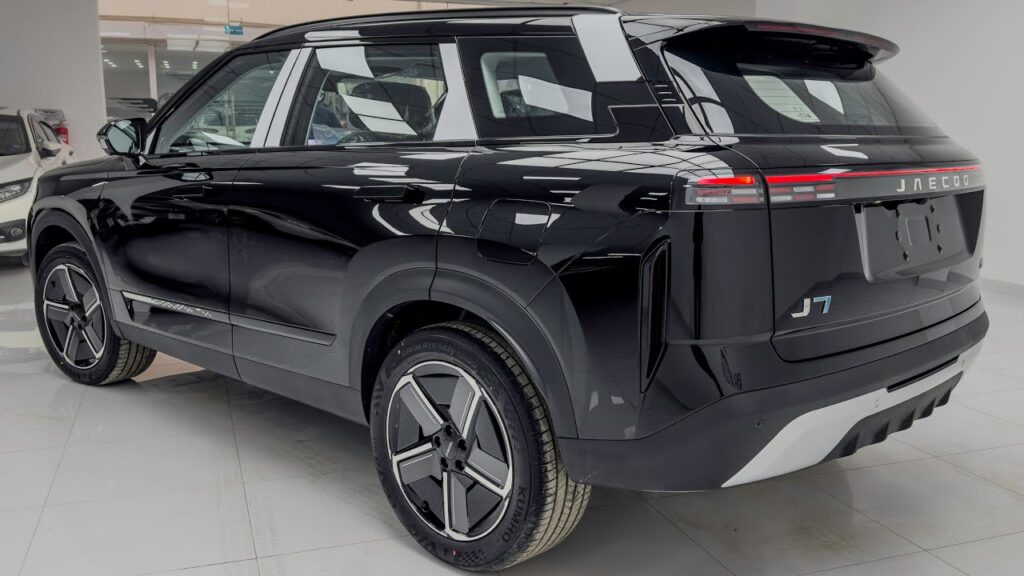
The rear continues the checkered flag theme in the tail lights. A piano black panel runs across the entire rear, connecting both tail lamps and creating a unified look.
| Rear Features | Details |
|---|---|
| Tail Lights | Checkered flag LED design |
| Boot Opening | Automatic |
| Boot Capacity | ~500 liters |
| Spare Wheel | Not included (repair kit provided) |
| Badging | SHS (Super Hybrid System) |
The 1,200 km Claim: Tested and Verified
Now, let’s address the elephant in the room. The marketing line that grabbed everyone’s attention: 1,200 km on a single tank and charge.
Here’s my honest testing. I took this vehicle and drove it extensively—city and highway—to see if the claim holds up.
All-Electric Range
| Metric | Value |
|---|---|
| NEDC Claimed | 100 km |
| EPA Equivalent (Real World) | ~70 km |
| EV Mode Cutoff | Automatically switches to HEV at 20% battery |
The vehicle offers three hybrid modes:
- EV Mode: Pure electric driving until battery depletion
- HEV Mode: Smart switching between electric and petrol
- EV+ Mode: Prioritizes electric driving
My Real-World Testing Results
| Driving Condition | Total Range Achieved |
|---|---|
| City Driving (HEV Mode) | 984 km (petrol) + 70 km (electric) = 1,054 km |
| Highway Driving | 825 km (petrol) + 60 km (electric) = 885 km |
So, did I achieve 1,200 km? No. But I did cross the 1,000 km barrier in city driving. That’s still exceptional for a vehicle of this size and performance.
Cost Per Kilometer Analysis
Let’s do the math. The J7 PHEV has a 60-liter fuel tank.
| Cost Component | Calculation |
|---|---|
| Petrol Cost | 60L × Rs. 260 = Rs. 16,500 |
| Electricity Cost | 18 units × Rs. 50 = Rs. 900 |
| Total Energy Cost | Rs. 17,400 |
| City Range | 1,054 km |
| City Cost per km | Rs. 16.5/km |
| Highway Range | 885 km |
| Highway Cost per km | Rs. 18.6/km |
For comparison, a conventional 1.5L turbo SUV in this segment would give you roughly 10-12 km/l, costing you Rs. 22-26 per kilometer. The J7 PHEV cuts that cost by about 30%.
Fuel Average Calculation
If you prefer the traditional “km per liter” metric:
- City: 1,054 km ÷ 60L = 17.5 km/l
- Highway: 885 km ÷ 60L = 14.75 km/l
These figures are impressive for a 342 hp SUV weighing well over 1.8 tons.
Interior: The Brain of the Car
Screens: Perfect Size
The interior welcomes you with two screens:
- 14.8-inch central infotainment screen
- 10.25-inch digital instrument cluster
I’ve said this before, and I’ll say it again: this is the ideal screen size. Anything larger becomes a distraction. Anything smaller feels dated. This hits the sweet spot.
Augmented Reality Head-Up Display
This is where the J7 PHEV flexes its tech muscles. The AR HUD projects:
- Speed
- Lane assist information
- Adaptive cruise control status
- Navigation prompts
If you get distracted, the system actually displays a warning on the screen: “You are distracted. Focus.” It’s like having a co-driver who’s constantly watching your eyes.
And if you find it too intrusive? You can turn it off with a simple shortcut from the dropdown menu.
Seats & Comfort
| Seat Feature | Details |
|---|---|
| Driver Seat | 6-way power with lumbar support |
| Passenger Seat | 4-way power |
| Ventilation | Heated and ventilated (both front seats) |
| Material | Dark grey/black leatherette |
| Cushioning | Very comfortable |
Center Console & Controls
The center console features:
- 50W wireless charger with cooling vent (prevents phone overheating)
- Drive mode selector (Eco, Normal, Sport)
- Hybrid mode buttons (EV, HEV directly accessible)
- Auto hold button
- 360° camera button
One Annoying Thing: The Inverse Window Switches
I need to rant about this. The window switches are inverse. You push forward to lower the window. You pull back to raise it. Who invented this? Why? If you know the logic behind inverse window switches, please tell me in the comments. It’s been bothering me across multiple Chinese vehicles, and I still haven’t found a good reason.
Technology & ADAS: Freedom to Choose
The J7 PHEV is loaded with Level 2 ADAS features, but here’s what sets it apart: you can turn them off selectively.
Many vehicles force ADAS features on you. Every time you start the car, you have to go through menus to disable the ones you find intrusive. Not in the J7.
| ADAS Features | Availability |
|---|---|
| Intelligent Cruise Control | ✓ (selectable) |
| Vehicle Departure Warning | ✓ (selectable) |
| Overspeed Warning | ✓ (selectable) |
| Intelligent Avoidance System | ✓ (selectable) |
| Forward Collision Warning | ✓ (selectable) |
| Lane Keep Assist | ✓ (selectable) |
| Lane Departure Warning | ✓ (selectable) |
| Blind Spot Monitoring | ✓ (selectable) |
The system even shows you on the instrument cluster which features are on and which are off. No safety nannying—just freedom to choose how you want to drive.
Smart Exit Warning
This is a genuinely useful feature. When you’re about to open the door and traffic is approaching from behind, the system gives you a warning inside the door. In Pakistan, where motorcycles often come out of nowhere, this can prevent accidents.
Audio System: Sony Branding, Average Performance
The J7 PHEV comes with a Sony audio system. To be honest? It’s more marketing than high-fidelity.
The system is decent. It’s not bad. But it’s not the premium audio experience the Sony branding might suggest. It gets the job done, but don’t expect concert-hall quality.
The Connected Car Experience: Lino App
The Jaecoo J7 comes with an app called Lino. Through this app, you can:
- Check fuel average and electricity consumption
- Monitor AC temperature settings
- Lock/unlock the vehicle remotely
- Track vehicle location
- Access various remote functions
The app is free with the car and adds a layer of convenience that’s becoming increasingly expected in this segment.
Driving Experience: Instant Torque and Surprising Handling
Power Delivery
The first thing you notice when you drive the J7 PHEV is the instant torque. With 525 Nm on tap, this vehicle pulls hard from a standstill. In Sport mode, it can even induce wheel spin from the front wheels—something that might catch first-time EV/hybrid drivers off guard.
The claimed 0-100 km/h time is 8.5 seconds, and from my testing, that feels accurate. It’s not a sports car, but for a 1.8-ton SUV, it’s more than adequate.
Handling & Ride Comfort
| Aspect | Assessment |
|---|---|
| Body Roll | Minimal even at high speeds |
| Cornering | Stable, with slight understeer at the limit |
| Suspension | Slightly bouncy compared to competitors |
| Ground Clearance | Generous, contributing to SUV feel |
| Steering | Light and easy for city driving |
Compared to the Haval H6 HEV or the Oshan S05, the J7 PHEV rides a bit firmer. It’s not harsh, but it’s noticeably bouncier over uneven surfaces. This is partly due to the 19-inch wheels with lower-profile tires and the higher ground clearance.
Visibility
One of the J7 PHEV’s strengths is excellent visibility. The boxy design, combined with a gap between the A-pillar and side mirror, means there are no significant blind spots. Even on roundabouts, you can see clearly.
Gear Lever Safety Concern
I have to flag a safety issue I discovered during testing.
The gear lever is on the right side (like most European and Chinese vehicles). If you’re driving and accidentally flick the right stalk—the one you might mistake for the indicator—the car can shift into neutral while moving. This happened to me, and I’ve heard from others who experienced the same.
There’s no safety lock preventing this. Be careful until you get used to the layout.
Also, at night, the gear lever has no illumination. You have to operate it blindly until muscle memory kicks in.
Indicator Reflection Issue
Another small but annoying issue: when you use the turn indicator at night, the light reflects off the A-pillar onto the side window. This creates an optical illusion that might make you think the blind spot monitor has activated when it hasn’t. It’s not a deal-breaker, but it’s something to be aware of.
Exterior & Practicality Details
Charging
The J7 PHEV comes with a 7 kW charger (the introductory pricing included this free). With the 7 kW charger, a full charge from 0 to 100% takes approximately 3 hours.
The charging port is located on the driver’s side. The vehicle also supports Vehicle-to-Load (V2L) —meaning you can use the car’s battery to power external devices. This is a feature that’s becoming increasingly popular for camping or emergency power backup.
Boot Space
The boot capacity is approximately 500 liters, and importantly, the floor is completely flat. No awkward humps or protrusions. You can easily fit:
- 2-3 large suitcases
- Groceries for a family
- Sports equipment
The 60:40 split rear seats fold down to expand cargo space. A boot separator is also included.
No Spare Wheel
Like most plug-in hybrids, the J7 PHEV does not come with a spare wheel. The battery pack occupies the space where a spare would traditionally go. Instead, you get a repair kit. This is standard across the segment, but something to be aware of.
Panoramic Sunroof
Unlike some competitors (like the Oshan S05, which has a fixed glass roof), the J7 PHEV features a fully opening panoramic sunroof. If you’re a sunroof enthusiast, this is a significant advantage.
Pricing: Where It Stands Today
| Price Component | Amount |
|---|---|
| Ex-Factory Price | Rs. 1,05,00,000 |
| On-Road Price (approx) | Rs. 1,07,00,000 |
The introductory price of Rs. 99,99,000 was a limited-time offer. Current ex-factory pricing is around Rs. 1.05 crore, with on-road landing at approximately Rs. 1.07 crore.
Warranty & After-Sales
| Component | Warranty |
|---|---|
| Vehicle | 6 years / 150,000 km (whichever comes first) |
| Battery | 8 years / 160,000 km |
| Dealership Network | 16 dedicated Jaecoo/Omoda dealerships |
Parts Availability & Ownership Costs
One important consideration for any new vehicle is parts availability and cost.
The headlight assembly for the J7 PHEV costs approximately Rs. 80,000 to Rs. 3 lakh—about 3% of the vehicle’s value. That’s on the higher side.
My recommendation: If you’re buying any new-generation vehicle—especially one with advanced electronics and LED lighting—get comprehensive insurance. And when you do, make sure your insurance policy explicitly covers the battery. Some insurers will happily take your premium but exclude battery coverage in the fine print. Don’t let that happen to you.
Jaecoo J7 PHEV vs Competitors
The plug-in hybrid segment in Pakistan is growing rapidly. Here’s how the J7 PHEV stacks up:
| Model | Launch Sequence | Key Difference |
|---|---|---|
| MG PHEV | First PHEV in Pakistan | Pioneer in the segment |
| Haval PHEV | Second entrant | Strong competitor |
| Oshan S05 PHEV | Later entrant | Fixed glass roof, lower price point |
| Jaecoo J7 PHEV | Current leader | Strong brand backing, opening sunroof, proven performance |
| Chery Tiggo 8 PHEV | Upcoming competitor | Similar pricing, 7-seater option |
The competition is heating up. But the J7 PHEV has one advantage: momentum. The positive sentiment from the J7 launch spilled over to the J5, and the brand is establishing itself as a serious player in the Pakistani market.
Verdict: Who Should Buy the Jaecoo J7 PHEV?
Strengths
| Area | Rating |
|---|---|
| Fuel Economy | Excellent (1,054 km city range achieved) |
| Power | 342 hp, 525 Nm – more than adequate |
| Brand Backing | Nishat Group – trusted name |
| Technology | AR HUD, ADAS with selectable features |
| Practicality | Large boot, opening panoramic sunroof |
| Visibility | Excellent, minimal blind spots |
Weaknesses
| Area | Concern |
|---|---|
| Suspension | Slightly bouncy compared to rivals |
| Gear Lever | No safety lock; can shift to neutral accidentally |
| Indicator Reflection | Reflects on A-pillar at night |
| Parts Cost | High (insure the vehicle) |
| No Spare Wheel | Repair kit only |
| Window Switches | Inverse operation (personal pet peeve) |
The Bottom Line
The Jaecoo J7 PHEV delivers on its core promise: exceptional fuel efficiency in a premium package. The 1,200 km marketing claim was ambitious, but my tested 1,054 km in city driving is still outstanding for a 342 hp SUV.
At Rs. 1.07 crore on-road, it’s not a cheap car. But when you factor in the running costs (Rs. 16.5/km in the city), the performance, the features, and the peace of mind that comes with Nishat Group backing, it’s a compelling package.
Is it perfect? No. The suspension could be smoother, the gear lever design is questionable, and parts are expensive. But for urban buyers who want a stylish, powerful, and efficient SUV, the J7 PHEV is one of the best options on the market today.
Quick Specs Summary
| Category | Specification |
|---|---|
| Engine | 1.5L Turbo (4-cylinder) |
| Battery | 18.3 kWh |
| Combined Power | 342 hp / 525 Nm |
| 0-100 km/h | 8.5 seconds (claimed) |
| Electric Range | ~70 km (real world) |
| City Range (Combined) | 1,054 km (tested) |
| Fuel Tank | 60 liters |
| Drive Modes | Eco, Normal, Sport |
| Hybrid Modes | EV, HEV, EV+ |
| Infotainment | 14.8-inch touchscreen |
| Audio | Sony (decent, not premium) |
| ADAS | Level 2 with selectable features |
| Airbags | Multiple (front, side, curtain) |
| Wheels | 19-inch alloy |
| Boot Capacity | ~500 liters |
| Warranty | 6 years / 150,000 km |
| Battery Warranty | 8 years / 160,000 km |
| Ex-Factory Price | Rs. 1,05,00,000 |
| On-Road Price | ~Rs. 1,07,00,000 |
*What do you think about the Jaecoo J7 PHEV? Would you consider it over the Haval or MG plug-in hybrids? Let me know in the comments below.*
Don’t forget to subscribe to PakWheels for more expert reviews and authentic automotive updates.
Disclaimer: Prices, specifications, and test results mentioned are based on the information and testing available at the time of review. Individual results may vary. Please verify with the official distributor before making any purchase decision.